The Guest Journey Starts Before the Front Desk
The guest journey before the front desk depends on clear service cues, a welcoming first contact, and thoughtful transitions that help guests feel oriented.
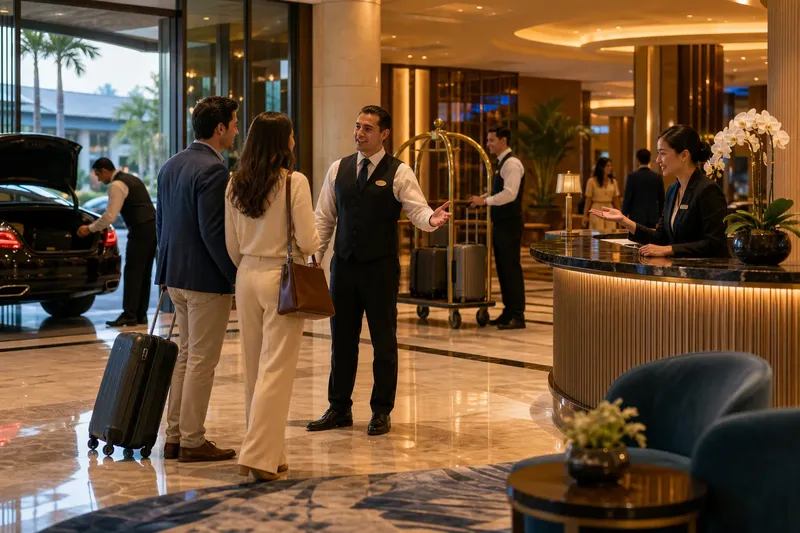
The guest journey before the front desk is shaped by what guests notice while they wait, pause, or look for help. At a casino resort, that can mean a clear valet handoff, a visible place to ask a question, or a staff member who explains what happens next.
Arrival routes are covered elsewhere; the service-design question here is how each early interaction feels. Small transitions matter because guests may be carrying luggage, coordinating with companions, or preparing for a reservation. Thoughtful cues help without demanding attention or making assumptions about what someone needs.
Service Before Check-In
Not every guest is ready to approach reception as soon as they enter. A traveler may need to hand off a vehicle, confirm a restaurant booking, or arrange assistance for a companion. A well-designed service experience makes those options legible without turning the lobby into a wall of competing instructions.
Consider the sequence of encounters: a valet attendant acknowledges the arrival, a bell attendant offers luggage help, and a greeter can answer a question about where to wait. Each person should know which needs they can handle and how to connect the guest with the right colleague. That prevents the guest from being passed from one person to another without an explanation.
Give each interaction a clear purpose. A greeting can establish welcome; a brief question can identify the guest’s immediate need; a handoff can name the next person or place. The guest should not have to explain the same request repeatedly.
Welcoming Without Pressure
Hospitality is not the same as constant attention. Some guests want conversation, while others prefer to find their bearings quietly. Staff can offer help in a way that leaves the choice with the guest: “Welcome. I’m here if you need directions or luggage assistance.”
Body language and placement also affect whether an offer feels comfortable. A staff member who remains approachable without blocking a walkway gives guests room to decide. If someone is clearly seeking assistance, a specific, open question is more useful than a generic greeting: “Would you like help with your bags?”
Respect a guest’s answer, including a polite refusal. The goal is to make assistance available, not to insist on it.
Coordinated Handoffs
A handoff is the moment one employee connects a guest with another person or service. It works best when the first employee explains the connection and, when practical, confirms that the next person is ready to help. Saying “My colleague at the bell desk can store that bag; I’ll let them know you’re coming” gives the guest a clear expectation.
Teams can support consistent handoffs with a shared directory of service names, contact methods, and escalation paths. Keep it focused on details employees need during a shift. If dining reservations, transportation, or guest assistance follow different processes, make those distinctions clear in staff guidance.
When a request cannot be handled immediately, explain the next action and who owns it. “I’ll contact the host and tell you when I have an answer” is clearer than an unqualified promise to take care of everything.
Service Design Questions?
How can staff offer help without interrupting?
Use a brief welcome and make assistance available without requiring a reply. If a guest signals a need or pauses to look for guidance, follow with a specific question.
What makes a handoff feel clear?
Name the next person or service and explain what they will do. When possible, share the guest’s request directly so they do not need to start over.
How should teams handle a service delay?
Tell the guest what action is underway and who will follow up. If the plan changes, update the guest rather than leaving them to seek out an explanation.
A Worked Service Scenario
Imagine a couple arrives for a dinner reservation before their room is ready. One guest has a suitcase, and the other wants to confirm the restaurant booking. The starting point is a busy lobby with a valet attendant, a bell desk, and a greeter on duty.
The valet attendant welcomes them and asks whether they need anything beyond the vehicle handoff. The guest mentions the suitcase and reservation. The attendant directs the luggage request to the bell desk and explains that the greeter can help confirm where to check the booking. The greeter contacts the restaurant host, then tells the couple where to wait and who will update them. The expected result is a distinct next action for each request, with no need for the couple to repeat the full story at every stop.
This scenario is an illustration, not a compliance assessment or proof that a service process works for every guest. A local walkthrough can reveal confusing handoffs, but it cannot establish accessibility compliance or account for every access need. For accessibility requirements, consult qualified professionals and applicable local standards.
Consistent Guest Cues
Service details should reinforce one another across teams. Before a shift, supervisors can confirm who handles luggage questions, reservation checks, and requests that require another department. The following observations can guide a practical decision:
- If guests repeatedly ask which employee handles luggage, then clarify the bell desk’s role in staff briefings; if guests already identify it easily, keep the current cue and review other sources of confusion.
- If an employee sends a guest elsewhere without explaining why, then add a short handoff phrase to the team’s service guidance; if the employee names the next contact and purpose, retain that approach.
- If staff give different names for the same service, then align the terms in the directory and shift briefing; if the names are consistent, look for unclear signage or missing contact details instead.
- If a guest is left waiting without knowing who will follow up, then assign a named team member to provide an update; if ownership is already clear, check whether the update is reaching the guest.
- If a temporary service change is not known across teams, then brief affected staff before the change begins; if staff have the current information, check whether guests can see the revised cue.
- If a guest declines an offer of assistance, then respect the refusal and remain available; if the guest asks for help, clarify the preferred support before acting.
Review the service sequence from the guest’s point of view, while treating that review as a local usability check rather than proof of universal access or regulatory compliance. The guest journey before the front desk becomes easier to understand when every employee makes the next interaction clear and keeps responsibility visible.