How Las Vegas Casino Resorts Became Destinations
Trace how Las Vegas casino resorts became destinations through lodging, dining, architecture, and entertainment, and see what each layer added to a visit.
Las Vegas casino resorts became destinations by bringing lodging, dining, and entertainment into the same visitor experience as gaming. El Rancho Vegas, an early Strip resort, is often used to mark this shift, but no single property explains the whole story.
Downtown foundations
Las Vegas developed as a railroad town, and downtown businesses served travelers before the Strip acquired its resort identity. Nevada legalized gambling in 1931, creating a legal framework for the state’s gaming industry. Downtown casinos grew within that local setting; their history is not a universal template for casino development elsewhere.
Hotels and restaurants existed in Las Vegas before the large-resort era. The change was not a simple switch from gaming-only rooms to hospitality. Instead, some properties increasingly presented a visit as a stay that could include several services.
Strip resort model
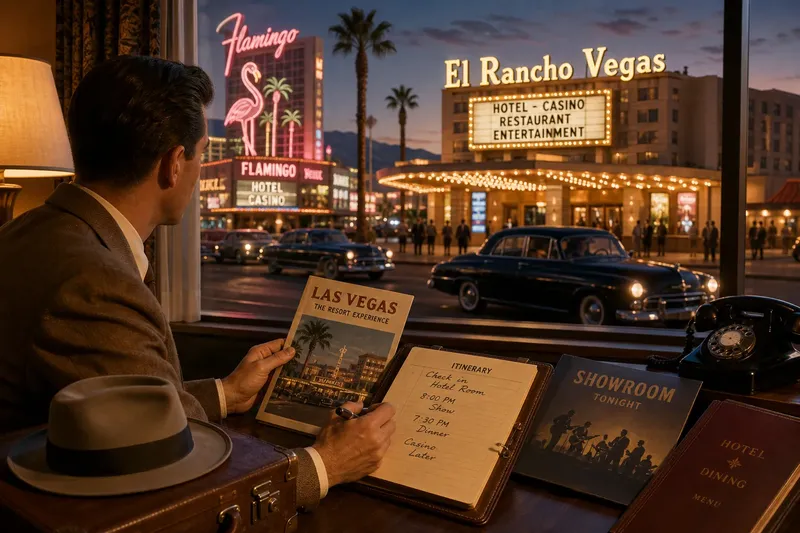
El Rancho Vegas opened on the Strip in 1941. Its hotel, restaurant, and entertainment offerings helped make an overnight stay part of the Strip’s appeal. A fire destroyed the property in 1960, ending the original resort but not the wider development of the resort model.
The Flamingo opened in 1946 and became another notable Strip property. Changes in ownership and management shaped its early history, so its opening should be distinguished from the resort’s later evolution. It is best understood as one milestone among several, not the sole origin of the modern resort.
Say an invented visitor in the 1940s is choosing between a short downtown visit and a Strip overnight stay. The visitor chooses a room, schedules a show, and plans to eat at the hotel. The resulting itinerary includes lodging, entertainment, and dining as well as gaming; it does not establish what every visitor did.
Architecture and spectacle
In the postwar decades, prominent Strip properties used entertainment and design to distinguish themselves. The Sands became associated with its showroom and performers. Caesars Palace adopted Roman-inspired architecture and decoration as a recognizable theme.
These properties illustrate different ways a resort could develop an identity: through a prominent entertainment venue or a strong architectural concept. They do not show that every casino followed the same path. A recognizable public image could help visitors understand what a property offered beyond gaming.
Large-scale resorts
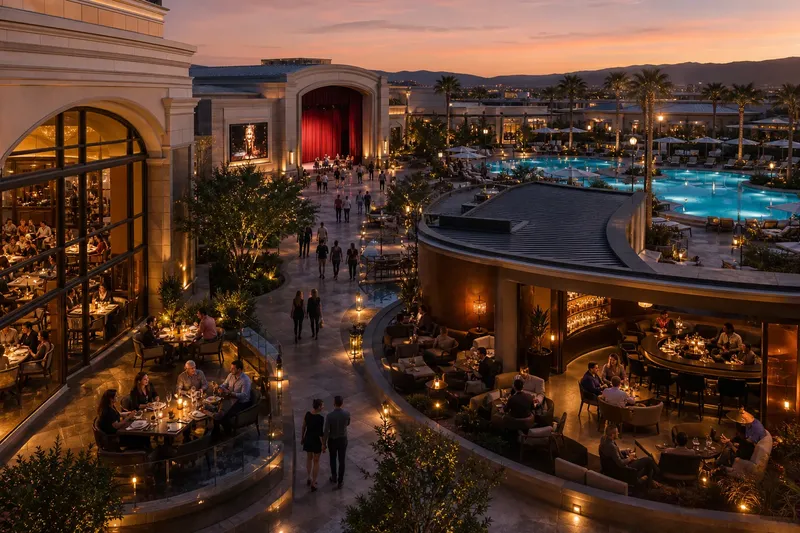
The Mirage opened in 1989 under developer Steve Wynn and marked a prominent new phase in Strip development. Its themed presentation and scale made architecture part of its public identity. Bellagio later offered another expression of the full-resort concept, bringing a hotel and casino together with dining, art, and fountains.
These projects reflected choices about land, financing, construction, branding, and intended visitors. Their history is not simply a story of adding attractions. Buildings and public spaces made business decisions visible along the Strip.
Questions about resort history?
When did the Las Vegas Strip become a resort destination?
No single opening date answers the question. El Rancho Vegas is an early landmark, while later properties such as The Mirage and Bellagio show how the resort offer developed.
What did El Rancho Vegas change?
It helped establish a Strip property where visitors could stay, dine, and find entertainment as well as gamble. That makes it a local milestone, not evidence that every early casino offered the same combination.
How did entertainment shape casino resorts?
Showrooms and performances gave some properties an identity beyond gaming. The Sands is one example of a resort associated with a prominent showroom, although entertainment was only one part of its appeal.
Why are The Mirage and Bellagio historically significant?
They are prominent later Strip milestones. Their themed design and broad hospitality offerings show how resort development presented architecture, lodging, and attractions as parts of a unified destination.
Reading the milestones
To trace how Las Vegas casino resorts became destinations, separate local milestones from broad explanations. Downtown gaming, early Strip hotel development, and later themed resorts belong to different stages of a varied history.
For any property in a resort chronology, ask what it added to its setting: lodging, a public entertainment identity, distinctive design, or a broader mix of services. That question keeps the account grounded in visible features without turning one opening into a complete explanation.